
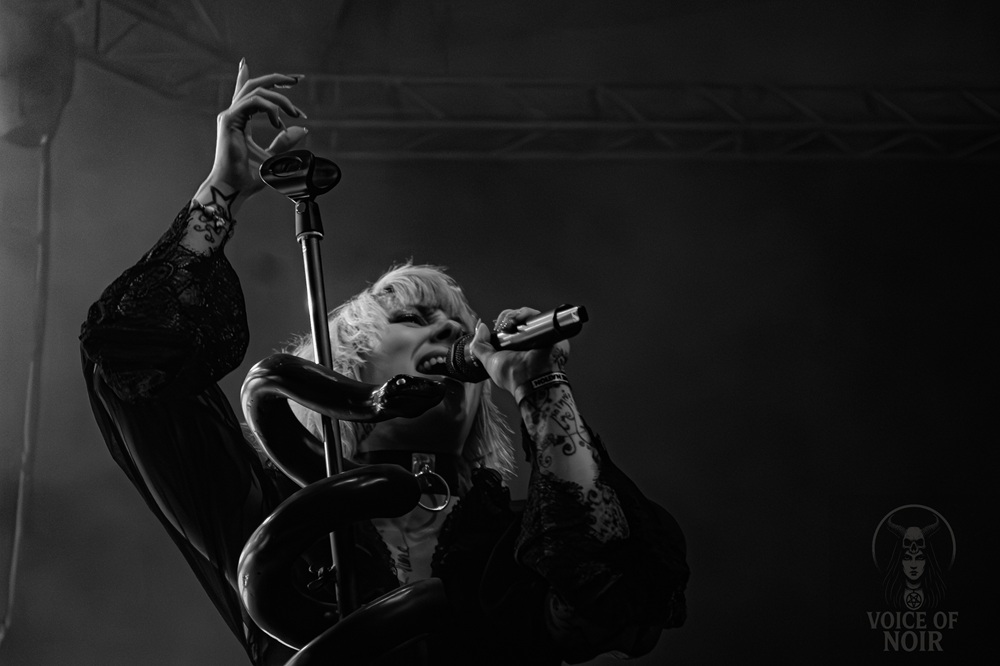
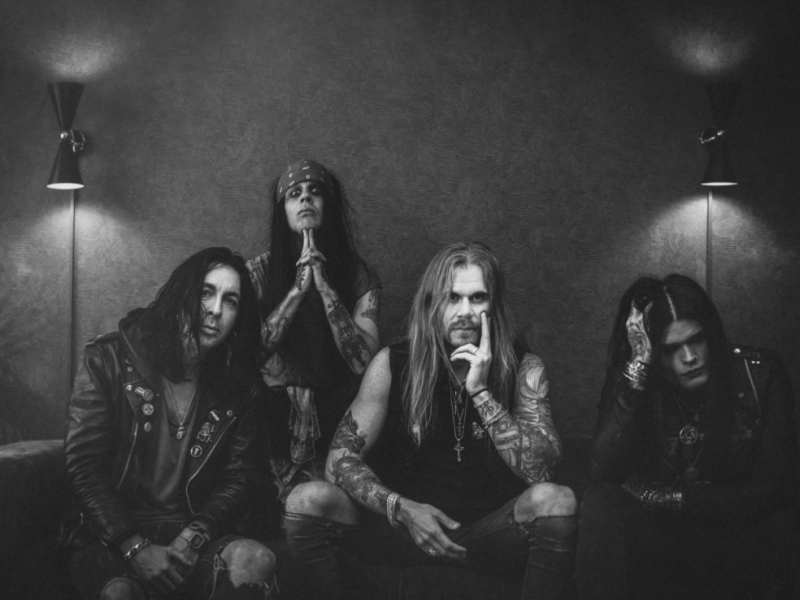
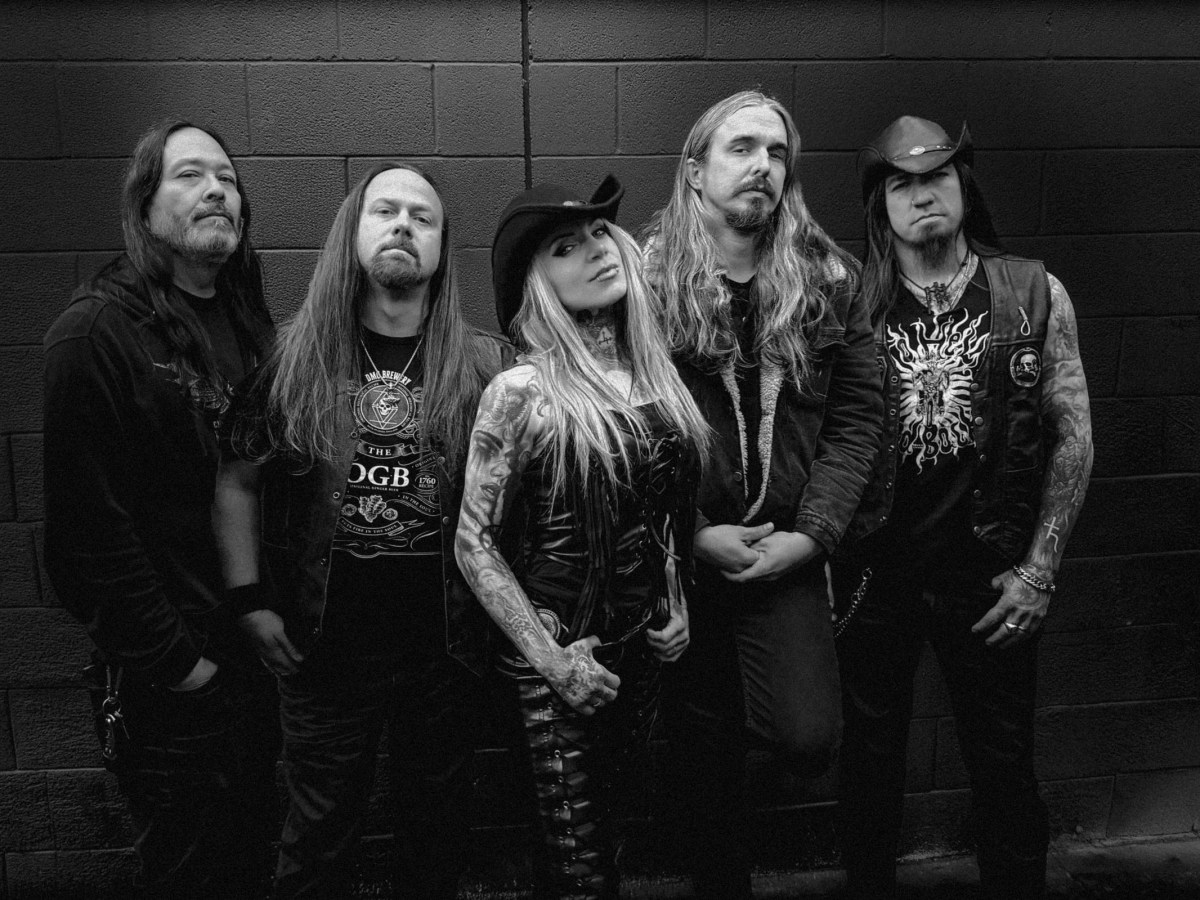
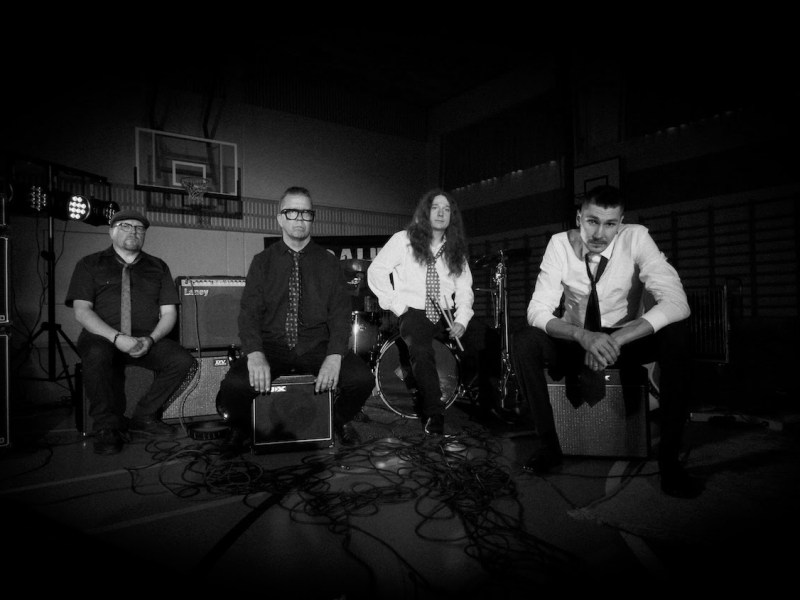
Some releases don’t arrive fully formed: they reveal themselves gradually, piece by piece, in fragments that only make sense once the full picture is allowed to unfold. With Frozen, Rioghan step into that space between uncertainty and resolution, where tension lingers beneath the surface and nothing is given away too easily. Ahead of their show at Kulttuuritalo in Helsinki (where they took the stage as support for Grandson) we sat down with three members of the band: Rioghan Darcy (vocals), Valtteri Revonkorpi (drums), and Tero Luukkonen (guitar). The band opened up about the evolving narrative behind Frozen, the shift in their creative process, and the quiet decisions that continue to shape their sound.
Your previous album “Kept” dealt heavily with emotional imprisonment, while the “Frozen” EP seems to move toward release and healing. When you look at these two works side by side, does “Frozen” feel like a continuation of the same story, or a deliberate turning point?
Rioghan Darcy: Both, kind of both. If you don’t ask anyone else about the story—only me—I’d say it’s somehow a continuation of the Kept theme.
Even though “Kept” is a very strict piece in itself—like one complete work of art—I felt like it needed some kind of resolution.
It ended quite depressingly. I don’t know if something can be too depressing, but still, I wanted to bring some kind of relief to the theme, because it was left open. Did we get out, or didn’t we? And now, with Frozen, we got out.
The title of the new single references internet slang for “I love you,” which is an interesting contrast to the darker atmosphere of the music. What made you choose such a modern symbol for such an emotional moment in the story?
Rioghan Darcy: Well, it was kind of… I originally wanted to name the song I Love You or something like that—but it sounded very stupid.
Valtteri Revonkorpi: It would have been nice though—I Love You, the new single.
Rioghan Darcy: Yeah, just imagine that. So we didn’t go with it. Also, I have a personal rule that song titles can only be one word.
Tero Luukkonen: True.
Rioghan Darcy: So then I had to dig around a bit, trying to figure out what to do with it. Eventually, I stumbled upon the ‘520’ slang in a completely different context, and I was like—okay, there we have it. That’s it.
It was also the title of the original poem I wrote.
And pretty much everything ended up in the lyrics. Maybe a few phrases were left out, but that’s about it.
Valtteri Revonkorpi: I’m sure not everyone knows what it means. It’s still a bit of a mystery.
Rioghan Darcy: I think so.
Valtteri Revonkorpi: Whereas I Love You isn’t. At all.
Tero Luukkonen: Until now.
Valtteri Revonkorpi: Everything in our music is a mystery. At least for Tero.
You’ve structured the EP almost like a narrative unfolding in chapters. When you were writing these songs, did you already see the entire arc from beginning to end, or did the story reveal itself piece by piece as the music evolved?
Rioghan Darcy: The songs were composed as a whole. They’ve always been meant to be one very long piece, actually, and then divided into different chapters.
This time, the instrumental parts were composed beforehand, before we had any lyrics or anything. So it was kind of my job to piece it all together. Then I started writing.
We already had the Frozen cover as well, so there was a kind of thematic foundation in place. From there, it just… unfolded on its own.
Valtteri Revonkorpi: We had the first demo of Frozen, which already defined the mood of the song. And when Teemu started writing the rest of the EP, he actually wrote the songs in the same order they appear on the final release—just moving forward from there. That’s why the arc is the way it is.
Rioghan Darcy: It’s written that way.
Valtteri Revonkorpi: So it’s not just a bunch of songs that could be arranged differently.
Rioghan Darcy: No, they’ve always been like that.
Valtteri Revonkorpi: We had that concept in mind, because originally you wanted to do a full covers EP—just cover songs. But we managed to convince you… there were negotiations.
What if we had one cover song, and the lyrical theme continued through our own songs, so everything works together?
Rioghan Darcy: Because I was very fixated on this pattern we had—first a covers EP with three cover songs, then a full-length album of original material, and then again a covers EP.
This time, we were supposed to do a covers EP. I already had the songs picked out—everything was ready. And then we had lunch… and suddenly everything changed.
But in the end, it was a very good idea. At first, I said no.
Tero Luukkonen: Like you always do.
Rioghan Darcy: But then I realized—okay, this is how it’s supposed to be.
Because usually, when something like this happens—when there’s a break in the pattern, something unexpected, a bit outside the box—you should follow it.
You should take that road. Because that’s probably the one that’s meant to be.
If “Kept” felt like being trapped in darkness, what emotional landscape does Frozen exist in? Is it warmth, uncertainty, hope—or something more complicated?
Rioghan Darcy: I think uncertainty and hope are good words for it. Even though there’s a clear story, there’s also—at least to me—a kind of tension running throughout the whole… release.
Not an album—an EP. Or can it be an album? It’s album number… yeah.
There are these lingering elements underneath. You can go there if you want, but at the same time, it’s also a very straightforward story—depending on how you choose to interpret it.
But yeah, I’d definitely say uncertainty is in the mix. Not just hope.
Last time we spoke, Rioghan was still evolving from a solo project into a fully functioning band. A year later, how has the dynamic between the members changed creatively?
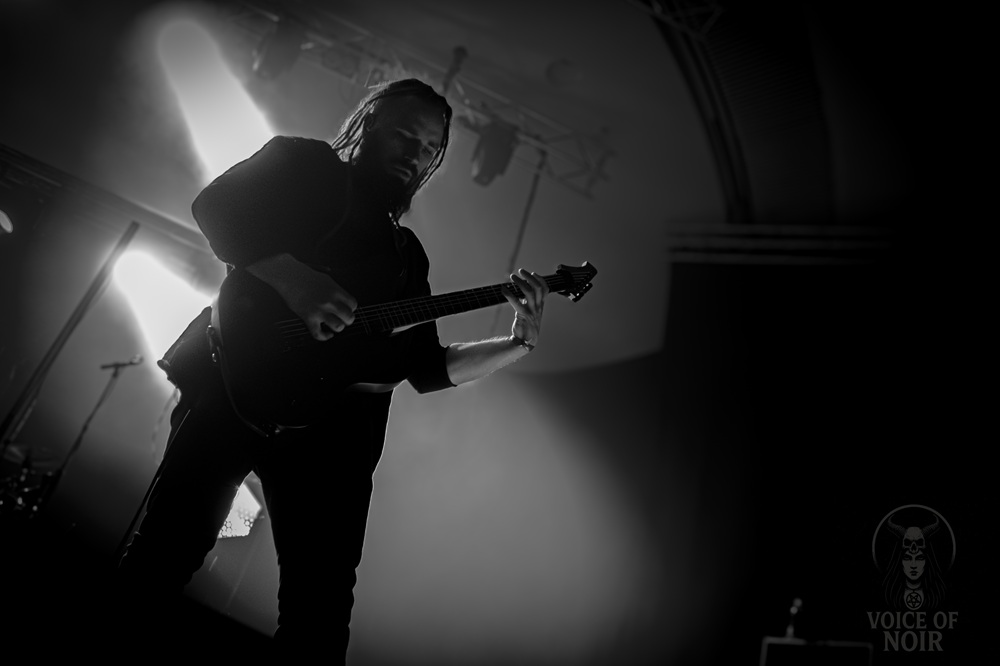
Valtteri Revonkorpi: Quite a lot, actually. If you listen to the Frozen EP, there’s a lot of new, really strong keyboard work in the mix, thanks to Aleks. He didn’t really play on Kept, except for the solo at the end of ‘Motion’. But this time, it’s a much bigger part of the sound.
Rioghan Darcy: Yeah, you can hear that right away. I think the difference between Kept and Frozen is very clear instrumentally.
Valtteri Revonkorpi: So during Kept, Aleks was more of a live member—but now he’s fully part of the band.
Rioghan Darcy: Yeah, whether he wants it or not. We chose him—he can’t get out.
Valtteri Revonkorpi: We had negotiations.
Rioghan Darcy: Now we have him. But also, I think…
Valtteri Revonkorpi: He also said no at first. Antti—he said no first.
Rioghan Darcy: Everyone says no at first. But I think that’s one big difference you can hear.
Also, now that we’ve played much more live as a band, I think it shows in the arrangements on the Frozen EP.
When we start with demos and then move into recording the actual takes, everyone has the space to bring in their own ideas. The demo is more like a guideline—something to refer to—but during the recording process, everyone can add their own elements if they want.
And I think you can hear that on the record.
Valtteri Revonkorpi: Or at least it feels like it.
Rioghan Darcy: Yeah, at least to us it does. But how can we really know?
Valtteri Revonkorpi: In the end, Teemu probably played everything anyway—he just didn’t tell us.
The “Frozen” EP will have an extremely limited physical release, only 25 copies. In an era dominated by streaming, what made you decide to create something so rare and personal for listeners?
Rioghan Darcy: I think we wanted to do something a bit different, because the Frozen EP itself is kind of a rare occurrence. We didn’t originally plan to make an EP like this.
And in a way, it’s a bit unusual—it’s like one very long piece divided into chapters.
Valtteri Revonkorpi: Which, by the way, you should really listen to as a whole when it comes out. Of course, we’re releasing singles, but that’s how it’s meant to be experienced.
Rioghan Darcy: But I also wanted to reflect that uniqueness in the merch we’re going to release. We were thinking about what kind of merch it should be, and I didn’t want to do anything too ordinary.
Like—sure, we could do a new T-shirt. But I didn’t want to do that right now.
So I thought maybe a really nice-looking LP would be the way to go. And also make it a very limited edition.
Let’s see how that feels.
Valtteri Revonkorpi: If you want to add value to something, make it rare.
Rioghan Darcy: I think it’s nice to create something tangible—something where there are only 25 copies, and then that’s it. No more in the world.
Because in the age of streaming, like you mentioned, you can have everything all the time. You just pay a subscription, and suddenly you have access to almost anything.
But with a physical release like this—you can’t.
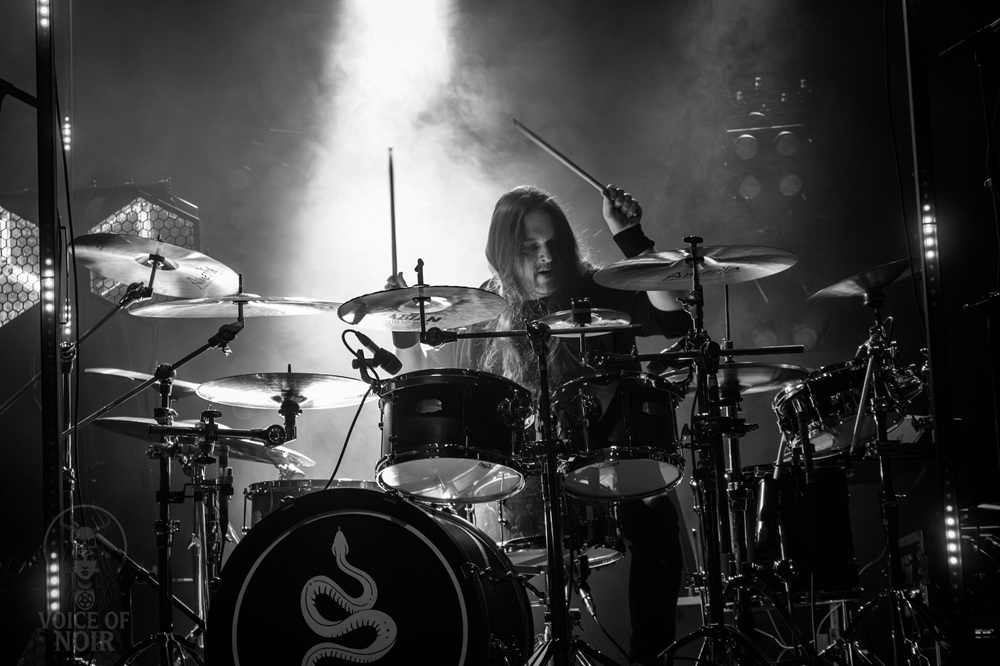
Supporting grandson at Kulttuuritalo and touring with I Am Your God are very different environments musically. Do you enjoy stepping into spaces where your music might surprise the audience?
Rioghan Darcy: Short answer—yes. I don’t know about you, but I do.
Valtteri Revonkorpi: I think that’s awesome.
Rioghan Darcy: Yeah, I like a challenge. And it also gives us the chance to vary our setlist a lot, because we have so many different kinds of songs.
We can build a set that leans more pop, or one that’s heavier—more metal, more progressive. And today, it’s a bit more on the alternative side.
Valtteri Revonkorpi: And hopefully we surprise someone—in a good way.
If someone hears Rioghan for the very first time in 2026, what do you hope they immediately recognize as the essence of this band?
Valtteri Revonkorpi: That’s a tough one.
Rioghan Darcy: Very tough question.
Valtteri Revonkorpi: Tero has nice hair when it’s down.
Rioghan Darcy: I hope that’s what comes across. Maybe… emotions. I’d say that.
Valtteri Revonkorpi: Emotions—and also that element of surprise. Like, what comes next?
Rioghan Darcy: Yeah.
Valtteri Revonkorpi: Hopefully.
Rioghan Darcy: So you can be surprised—not just once, but many times.
Valtteri Revonkorpi: What is this?
Rioghan Darcy: Maybe good surprises… or maybe a different kind of surprise.
Valtteri Revonkorpi: This also happened in the States—I was just about to stop listening. But that’s okay too.
Written by Ditty
Photos: Péter Tepliczky



Leave a comment