
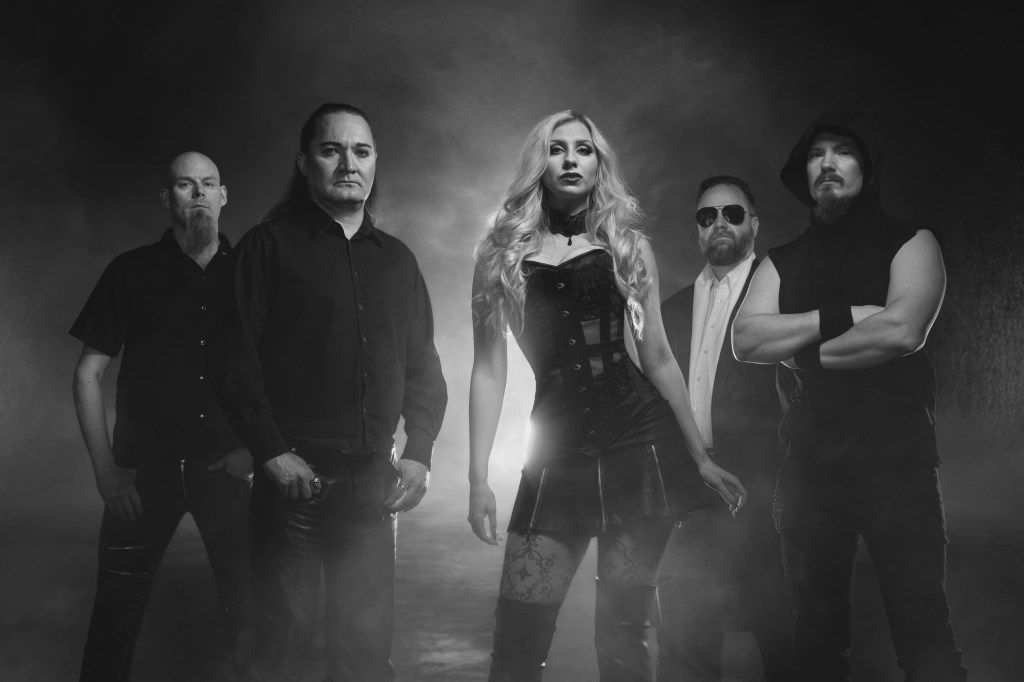
With “Temptation’s Gates“, Amberian Dawn opens a new chapter in its journey. Embracing a heavier sound while exploring themes of inner freedom, self-discovery, and temptation, the album also marks the arrival of new vocalist Nicole Willerton, whose versatility has brought fresh creative possibilities to the band. We sat down with founder Tuomas Seppälä and Nicole to discuss the making of the album, the evolution of Amberian Dawn, and the creative freedom that shaped this new era.
“Temptation’s Gates” feels like a turning point for Amberian Dawn. At what moment during the writing or recording process did you realize this album was becoming something different from what you’ve done before?
Tuomas Seppälä: Well, I started the songwriting process about a year ago. We had quite a long break after the previous albums, so there was a bit of a pause before I started writing again.
When I got back to it, the songs just naturally turned out heavier. I don’t really know why. Maybe it was simply time to make something more metallic again, like we used to do in the past.
There wasn’t anything particularly special about the process—it was a fairly traditional way of making music.
Many bands become defined by a certain sound. Did you consciously try to challenge what people expect from Amberian Dawn on this album?
Tuomas Seppälä: I think we just did what we wanted to do and made our own music in our own way. We usually don’t think about anyone else.
Nicole Willerton: There was no intention of reinventing ourselves. It was more something that came naturally.
If “Temptation’s Gates” had been released ten years ago, do you think it would have sounded the same, or is it an album that could only exist because of where the band is today?
Tuomas Seppälä: Hmm, I think my songwriting has changed over all these years. Also, my arranging skills have improved, so I think the album would have been quite different if it had been made 10 years ago.
I’m also glad that our current lineup is working so well. We now have the opportunity to let all the members make the music sound a little more like their own. I mean, I don’t write every single note for all the band members anymore.
They’re now able to use their own talents and bring their own ideas to their instruments. So we’re more of a band now. In the beginning, it was much more like my solo project. Now it feels much more like a band.
Which song changed the most between its earliest demo version and the final recording?
Tuomas Seppälä: It’s always like that when the first demo is done. During that initial phase, when it’s only guitars or keyboards playing the vocal parts, there are always surprises.
There are usually a couple of songs where you feel like they’re going to be really great with vocals, really massive and powerful. Then there are other songs where you think, “Hmm, these might not work.” But there are always surprises during the process.
Some songs end up working much better than you expected, and vice versa. That was also the case with this album. There were a few surprises along the way.
For me, the last song on the album, “Phantasmagoria,” was one of them. I wasn’t expecting that much from it at first, but once the vocals were added, it turned out really great in the end.
How do you feel about that, Nicole?
Nicole Willerton: Yeah, well, the songs obviously develop throughout the process of creating them. Sometimes you might think, “How is this going to sound?” But it’s a joy to follow a song and see how it develops.
And yeah, it’s always like this with demos. The person who creates them usually has a clear idea of where the song is going from the very beginning. Then it’s about everyone else adapting to that vision and understanding it.
Which song was the most challenging for you technical-wise?
Nicole Willerton: Ah, definitely the song “Life Is Art” was technically difficult to sing and also challenging in terms of arranging the backing vocals. It’s a really massive song, and it requires a lot of vocal strength as well.
At the same time, it was a joy to work on because I’m really happy with the outcome. And in general, I quite like that kind of massive sound.
Which song are you looking forward the most to finally sing it live?
Nicole Willerton: I quite like singing “Unchained” because it’s a really fun song to sing. It features a lot of different vocal techniques and some fun melodies.
I also think “Temptation’s Gate” is going to be a lot of fun to sing.
Every album tends to have one song that quietly becomes a favorite among the band members. Which track would you nominate as the hidden gem of “Temptation’s Gates”?
Nicole Willerton: I think it varies between each band member.
Tuomas Seppälä: Our drummer, Joonas, told me that he really likes “Moon.” In fact, he told me it’s the best song I’ve ever written.
I don’t agree, though. I don’t think it’s my best song.
As for my favourites on this album, it changes every day. Right now, I would probably pick “Temptation’s Gate” and “The Vision of Dreaming.” But it really varies from day to day.
Nicole Willerton: I think the best song on the album is “Temptation’s Gate.” My personal favourite is “Moon,” but I’m also a big fan of “Eternal Flame.”
It’s hard to choose. I agree with Tuomas—it really depends on the mood you’re in.
Temptation is often portrayed as something dangerous. On this album, does temptation represent a threat, a liberation, or perhaps both?
Nicole Willerton: Well, that depends. When you live in a society where you feel the need to repress your feelings and desires, temptation can naturally become a threat.
But this album is about searching for inner liberation and inner freedom. In that sense, temptation is actually something we strive for. Yet we often choose not to pursue it because of judgmental obstacles and other pressures around us.
So, in many ways, it’s about finding what you truly want and, through that, realizing your own freedom.
The album balances darkness and empowerment. Do you think people are more drawn to music that reflects their struggles, or music that helps them escape them?
Nicole Willerton: I wouldn’t call it escapism. I would call it more a form of self-development.
And even if a song isn’t necessarily the most joyful, even if it’s sad, I think it can still be comforting. At least for me, listening to music that makes you feel understood can be very comforting.
With a new chapter beginning for Amberian Dawn, what has this album taught you about yourselves as a band?
Tuomas Seppälä: Hmm. At least all of us in the band are very good friends, so it’s very easy for us to work together.
We’re also happy that Nicole has fit into the group so well. We share the same kind of humour, and we like many of the same things—the same kind of music and even the same film directors.
So it’s been really easy to work together.
Nicole Willerton: Yeah, we like similar aesthetics in general, which is also a big part of the band. It’s the whole concept, right? So it all fell very naturally into place.
Every lineup change inevitably brings new energy. What do you think is the biggest strength the current incarnation of Amberian Dawn has discovered?
Tuomas Seppälä: I think one of our strengths is the core group of the band. The musicians are a really solid unit, and we’ve been playing together for so many years that it’s very easy for us to make music together.
Now we also have a new singer, which brings new possibilities because Nicole is able to sing in many different styles. That’s been really helpful in the creative process as well.
We feel like we’re not limited in any way. If you have a singer with a more limited vocal range or skill set, you naturally have to take those limitations into account, which can affect your artistic choices. But now it feels like there are no limitations, because Nicole can do almost anything.
There is often a difference between the story an musician tells and the story a listener hears. What is the most interesting interpretation of your music that you’ve encountered so far?
Nicole Willerton: The ironic thing is that when we released “Unchained” and people started watching the music video, many of the comments described how well the music worked together with the visuals.
I haven’t read every comment, but it seemed that a lot of people perceived it in a similar way to how we did. So perhaps they shared a similar vision to the one we had.
At the same time, I find it interesting to hear what people have to say, but I also like to let them have their own interpretations. It’s not that I don’t want to hear them—it’s just that I have a very clear idea of what something means to me, and someone else’s interpretation of a piece of art can be completely different.
Sometimes it’s better not to try to fully understand every interpretation, but simply accept that we all perceive things in different ways.
Unfortunately, people on the internet can sometimes be quite harsh, and comment sections are not always the most welcoming places. As a vocalist, you’re naturally exposed to a lot of public feedback—both positive and negative. How do you approach reading comments, and what helps you maintain a positive mindset without letting criticism affect you too much?
Nicole Willerton: It’s a good question because I’m actually quite a sensitive person.
But I think that when you grow up, whether through music competitions or life in general, you learn that things don’t always go your way. You don’t always win. You learn how to fall and pick yourself up again. And I feel that the older you get, the stronger you become in that regard.
If you’ve been through a lot of different experiences, that strength stays with you and helps carry you forward. That’s definitely a big part of it.
And if something ever does get to me, I like to talk to the people who are close to me. But honestly, it hasn’t really been like that. I don’t feel that it bothers me too much.
There are also so many positive comments, and I try to focus on those instead.
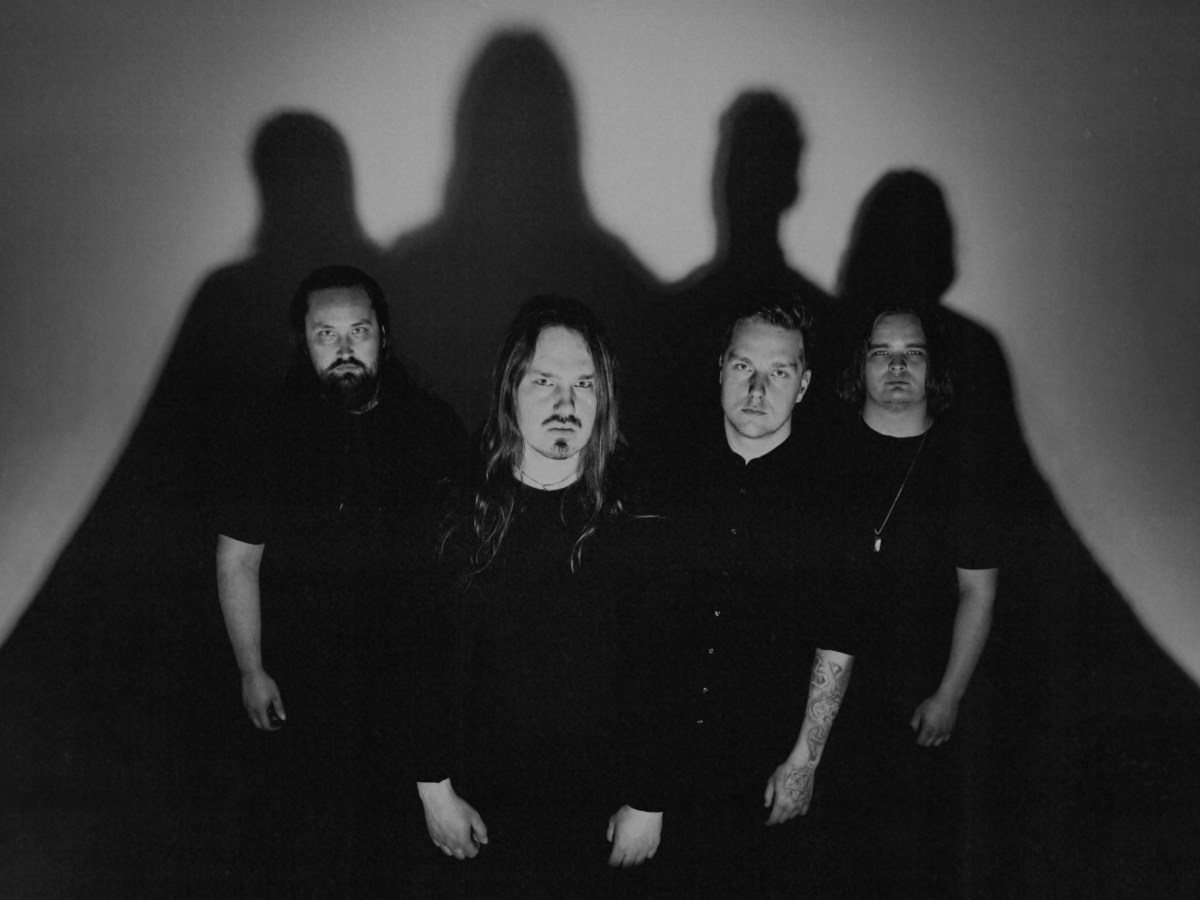
Photo Credit: Kanerva Mantila



Leave a Reply