
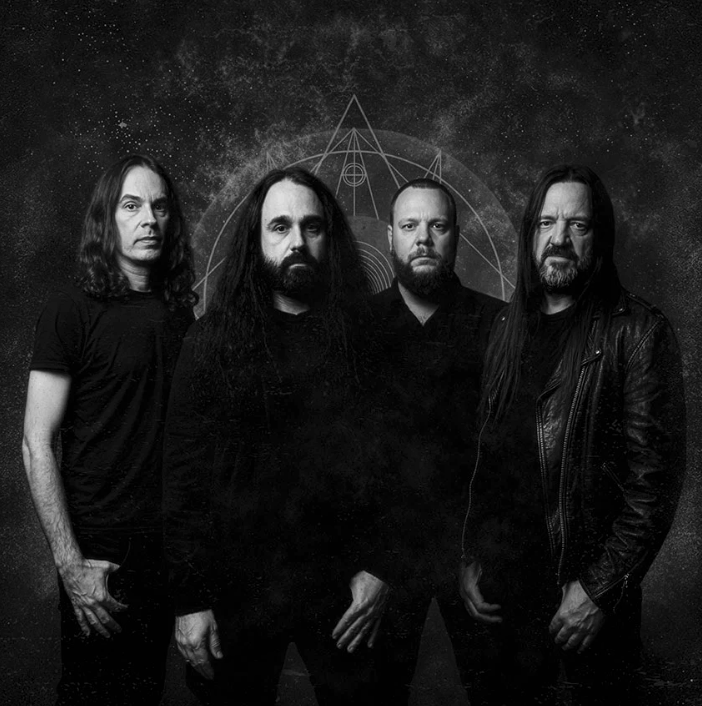
Some albums are collections of songs. Others are experiences. Obscured Horizons, the upcoming release from Australian doom/gothic metal veterans The Eternal, belongs firmly in the latter category. Across nine emotionally interconnected tracks, the album unfolds like the stages of an inner transformation: moving from the shock of collapse to the quiet acceptance that eventually follows.
Rather than relying solely on crushing heaviness, Obscured Horizons succeeds because it constantly balances darkness with beauty. Throughout the record, the weight of the guitars is countered by the expressive vocal performance, creating an emotional landscape that feels deeply human rather than merely melancholic.
The opening track, “Lament for the Hollow,” immediately establishes the album’s emotional core. It begins with a commanding presence, its opening notes carrying an undeniable sense of gravity. Yet the heaviness never overwhelms the listener, thanks to the warmth and vulnerability of the vocals. The song captures the first moments after emotional collapse—the confusion, the racing thoughts, and the overwhelming silence that follows when life suddenly changes.
The second track, “Existing to Expire,” introduces a different kind of movement. More dynamic than its predecessor, it feels almost automatic, as if someone continues putting one foot in front of the other purely out of habit. Beneath that forward motion, however, lies an exhausting weight. Harmony always seems just out of reach, and just when the listener believes the song has reached its conclusion, it rises once more, reinforcing the feeling of an endless cycle that refuses to end.
With “Colours Fade,” the album briefly exhales. The opening is calmer, richer in texture, and more colourful thanks to its broader instrumental palette and brighter melodic ideas. That sense of light is soon interrupted by heavier passages, perfectly mirroring the emotional struggle between hope and despair. It evokes the feeling of watching the world slowly lose its colour while desperately trying to pull yourself back toward the light before everything fades into grey.
“Harmony Breaks” opens with purpose and confidence before descending into controlled chaos. It feels like the moment when the harmony surrounding someone’s life suddenly fractures, leaving behind only noise and uncertainty. Here, the vocals and instrumentation move together seamlessly, reflecting the desperate search for a familiar balance that can never quite be restored. The moment the lyric “when harmony breaks” gives way to a powerful guitar solo supported by thunderous drums is one of the album’s emotional peaks—a musical representation of something breaking beyond repair.
The emotional shift continues with “I’ve Seen the Dream.” There is still pain present, but it is no longer all-consuming. Instead, the song feels like the first morning after accepting a difficult truth. Desperation remains, yet beneath it lies the quiet beginning of healing. It captures the subconscious realization that although one chapter has ended, another has already begun, even before the conscious mind is fully ready to acknowledge it.
The album reaches one of its darkest moments with “Liminality.” Its crushing introduction immediately conveys anger and frustration, amplified further once the vocals enter. Yet the song refuses to remain trapped in rage alone. As it progresses, softer passages emerge, portraying the internal battle between acceptance and resentment. It is the sound of someone realizing that the structures they once trusted had become a cage—a necessary awakening, even if the truth itself is painful.
Perhaps the album’s emotional turning point arrives with “Obscured Horizons.” Despite its powerful beginning, the song carries an unexpected sense of harmony. Listening to it feels like surrendering to ocean waves—not in defeat, but in acceptance. Rather than fighting uncertainty, the music encourages embracing it. The interplay between the vocals and instrumentation creates a floating sensation, allowing the listener to drift peacefully despite the turbulence beneath the surface.
By the time “Yesterdays Gone” begins, the emotional landscape has noticeably changed. There is a quiet optimism woven into the melodies. The song feels like the realization that the past cannot be rewritten, but the future can still be built. Pain gradually transforms into strength, and the soaring guitar solo toward the end resonates like the voice of hope itself. The closing moments carry remarkable confidence—a clear decision to continue moving forward.
The album concludes with “Awaken,” but instead of ending with a dramatic explosion, The Eternal chooses something far more powerful: emotional honesty. The closing track is bittersweet, carrying equal measures of grief and hope. It acknowledges that an important chapter has ended, yet it also reveals that a new future could only exist because of that ending. The scars remain, but so does the wisdom earned through them. Every emotion introduced throughout the album seems to converge here, making Awaken less of a conclusion and more of a quiet rebirth.
What makes Obscured Horizons so compelling is its emotional authenticity. The Eternal never forces optimism, nor do they dwell endlessly in despair. Instead, they explore the complicated space between those extremes—the place where healing actually happens. Musically, the album shifts effortlessly between crushing doom, gothic melancholy, and moments of unexpected beauty, while the vocals consistently provide the emotional thread that binds everything together.
Rather than simply telling a story, Obscured Horizons invites listeners to experience one. It is an album about breaking, rebuilding, and ultimately discovering that uncertainty, pain, and imperfection are not obstacles to life—they are what give it meaning.
“We Wanted It to Feel Like an Emotional Journey” – The Eternal on Crafting Obscured Horizons
After listening to Obscured Horizons, one thing became immediately clear: this isn’t an album designed to be consumed track by track. Instead, it unfolds like a carefully written emotional narrative, carrying listeners through grief, anger, acceptance, and ultimately hope. After our listening session, we sat down with drummer Jan Rechberger and bassist Niclas Etelävuori to discuss how that journey came together.
Every song has its place
For Rechberger, the album’s emotional flow wasn’t an accident.
“We decided to split the material between two releases because we wanted this album to be very cohesive. We also didn’t want to repeat what we did with Skinwalker. We kept the strongest emotional songs together on this record.”
According to him, arranging the tracklist became almost as important as writing the songs themselves.
“The song order was crafted very meticulously. We wanted the emotion to constantly rise and fall, so the drama never really stops.”
That attention to pacing is something listeners quickly notice. Rather than offering isolated moments, Obscured Horizons feels like one continuous emotional arc.
Real emotions behind the lyrics
One of the album’s strongest qualities is its authenticity. While many concept records rely on fictional narratives, The Eternal chose a much more personal approach.
Etelävuori explains that vocalist Mark Kelson drew directly from his own experiences.
“His lyrics come from a place that he’s actually lived through. It’s not fantasy. He’s been there, and I think that always connects with people more than something that’s simply made up.”
Rechberger agrees.
“He has an amazing voice, but it’s really the way he interprets those emotions that makes it special. As a collaborator and producer, that’s remarkable to witness.”
Songs that stay with the band
When asked which tracks resonate with them most emotionally, neither musician found it easy to choose.
For Rechberger, “Harmony Breaks” stands out.
“We spent a lot of time making that song even more emotional than it originally was. I’d also mention ‘I’ve Seen the Dream’ and ‘Colours Fade’.”
Etelävuori‘s answer changes almost daily.
“It depends on how I’m feeling that day. Right now I’d probably say ‘I’ve Seen the Dream‘. But tomorrow it could be something else. Hopefully there’s something on this album for everybody.”
More than melancholy
Although Obscured Horizons explores difficult themes (including disillusionment, emotional collapse, and finding clarity again. Etelävuori believes those emotions are universal.
“Everybody goes through times when life feels blurry. Eventually things begin to clear again.”
Rather than offering simple answers, the album gives listeners space to recognize pieces of themselves within its songs.
An album meant to be played again
As our conversation came to a close, we asked what they hope listeners experience after reaching the final track.
Etelävuori smiled.
“I hope they get to the end and immediately want to start it again.”
For Rechberger, it’s about appreciating the craftsmanship behind the record.
“I hope people notice how carefully everything has been put together. We wanted it to be catchy, but also full of surprises, progressive ideas, and interesting instrumentation. Hopefully listeners discover all those little details we spent so much time crafting.”







Leave a comment