
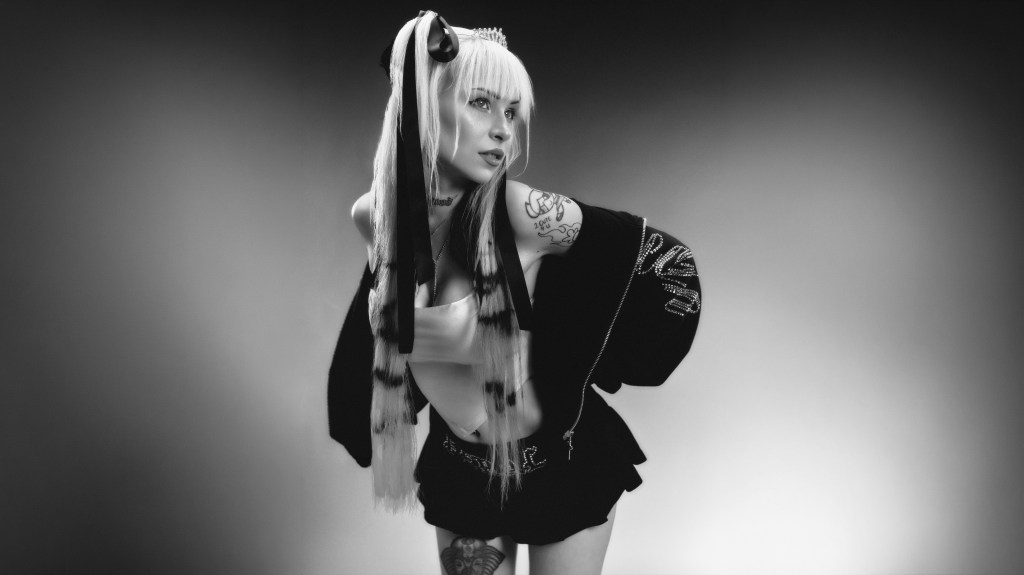
Just a few years ago, Nenerchy was teaching herself to record songs at home, unsure whether anyone would ever hear them. Today, she is one of Finland’s most exciting emerging artists, building a career defined by fearless creativity, striking visuals, and an unwavering commitment to authenticity. We sat down with the rising musician backstage at Ruisrock Festival to talk about the journey from self-doubt to self-expression, the importance of staying true to yourself in an increasingly demanding industry, and why, sometimes, the smallest moments can change the course of a life.
Our conversation with Nenerchy naturally started at where every story begins: childhood. Away from the stages, the releases and the growing attention surrounding her music, she spoke about a life that was, in many ways, surprisingly ordinary.
“I was born in Jyväskylä,” she recalls. “Back then it was just me, my little brother and my parents.”
She describes growing up in a large house tucked away from the bustle of the city, surrounded by only a handful of neighbouring families. It was the kind of place where life moved at its own pace—a quiet environment that, looking back, she remembers fondly.
“It wasn’t exactly a farm,” she says with a smile, “but it was far from everything. There were only a few families around, and it was a really nice place to grow up.”
When she was in the second grade, her parents divorced, bringing significant changes to her family life. A few years later, her mother remarried, and what had once been a family of four gradually became a much larger household.
Despite eventually pursuing music professionally, Nenerchy is quick to dismiss the idea that she was raised in a particularly musical environment.
“I never really had music being a big part of growing up,” she explains. “Before preschool my mum took me to a music preschool, but honestly, I don’t know if that had anything to do with anything.”
Unlike many musicians whose stories begin with family bands, instruments filling the living room or parents introducing them to their favourite records, Nenerchy’s path developed almost independently.
“I don’t really have musical people in my family,” she says, before mentioning one exception. “My stepsister, Ella Salo, from my dad’s side of the family, has recently started making music as an aspiring artist.”
Although music was never a defining part of her childhood, Finland’s school system quietly planted the first seeds.
Like many Finnish children, she began formal music lessons at school, where every student was handed the same humble instrument.
“We all had to buy recorders—the little whistle thing,” she laughs. “Everyone had to learn to play them, and I was excited. I was actually good at it, and I really enjoyed it.”
Still, those early lessons alone were not enough to spark a lifelong ambition. That turning point came several years later.
After completing the standard nine years of comprehensive school, Nenerchy chose to attend Finland’s optional tenth grade in order to improve her grades. Unexpectedly, it became one of the most formative periods of her life—not because of academics, but because of a teacher.
“My music teacher was just… really, really nice,” she says. “He taught me to play guitar. I still don’t really know how to play,” she adds with a laugh, “but it was fun. He got me excited about music again.”
It was during that year that she formed her first band, an experience she now sees as the true beginning of her musical journey.
“That’s where it all started.”
Even so, the path ahead was anything but straightforward. Nearly a decade passed before she seriously began creating her own music.
Looking back, however, one thing stands out above everything else: the people who encouraged her along the way.
“My experience with music teachers in Finland has been amazing,” she reflects. “They’ve been the best teachers I’ve ever had. They treated me like a person—not just a student. They weren’t only focused on grades. They actually cared about who you were.”
Long before she began releasing music, Nenerchy had already found a stage.
Cheerleading became her first creative outlet, giving her the opportunity to perform in front of an audience—something she had always been drawn to.
“When I started cheerleading, I loved it because I got to shine,” she says. “I was the one up in the air all the time. It was my time to shine.”
Performance, she explains, has always been part of who she is.
“I’ve always loved the good kind of attention,” she smiles. “I’ve always wanted to perform and be the star. Ever since I was a little kid, that was my thing.“
Yet cheerleading shaped her in another, less obvious way. Music was an inseparable part of every routine, and while teammates debated which songs should make it into the competition mix, Nenerchy found herself looking for a more creative solution.
“Everyone would say, ‘Can we put this song in? Can we use that one?‘” she recalls. “Our coach would tell us we couldn’t fit everything in, and I thought, ‘Well… I can make all of them fit.’“
Instead of choosing between songs, she began experimenting by creating her own edits.
“That’s how I got more into music,” she explains. “The mixing itself wasn’t really my thing in the end, but it was fun, and it opened another door for me.”
That fascination with contrasts would later become one of the defining characteristics of her artistic identity.
One of the clearest examples is “Bailarina“, the title track of her “Prima Bailarina” album. While the name might initially evoke grace and classical elegance, its meaning is much more playful.
“I love contrasts,” she explains. “For me, it’s about taking the idea of a ballerina and mixing it with the Finnish word baila, which means ‘to party.’ So it’s like a party ballerina.”
Adding prima in front of it creates another layer.
“It makes it feel elegant,” she says. “So it’s about combining those opposites—the elegant and the trashy, the good and the bad. I just love putting those things together.”
The song itself, she adds, is ultimately a celebration of youth.
“It’s just about being young, wild and free.”
Watching the music video, it’s difficult not to notice another message woven throughout the visuals: a quiet sense of confidence and body acceptance.
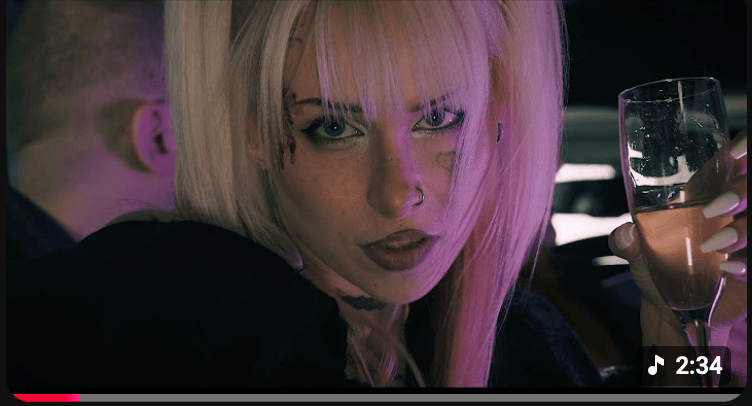
For Nenerchy, that wasn’t accidental.
“It’s important,” she says when the conversation turns to body positivity.
She openly reflects on the insecurities she experienced during her teenage years.
“From seventh to ninth grade I was very insecure. I’ve always been small, but people bully each other over the stupidest things. I became really insecure, and I struggled a little with eating.”
Today, having reached a healthier relationship with herself, she hopes that her music and public presence can encourage others to find that same acceptance.
“I’ve grown up and learned to accept myself, and I want to spread that.”
Still, she approaches the topic with great care—not because speaking about her own experiences is too painful, but because she knows many people are still living through similar struggles.
“It’s not difficult to talk about because of what happened to me,” she explains thoughtfully. “It’s difficult because I don’t want to say anything wrong to someone who’s going through it right now. I don’t want to make anyone feel uncomfortable.”
Acceptance, however, was only one chapter of the story. The next would begin with an unexpected spark—and a festival that would quietly change the course of her life.
For someone whose career has gathered momentum so quickly, it is almost surprising to hear how recently it all began.
The turning point came during a music festival she attended a few years ago. As fate would have it, she would later return to that very same festival—not as a member of the audience, but as one of the artists performing on its stages.
“It’s kind of a full-circle moment,” she says.
While watching one of the performances that day, she experienced something she had never felt before.
“I’d never started liking an artist that fast,” she laughs. “I remember thinking, ‘Wow.’ There wasn’t a single song I didn’t like. After the show I listened to everything, watched all the interviews… I became a complete fangirl.”
What began as admiration for another artist would unexpectedly become the spark that ignited her own journey.
The drive home from the festival would change the course of her life.
Sitting in the car with her friend Siri, she decided to reveal something she had kept to herself.
“I told her, ‘You know… I’ve actually written some rap lyrics. Do you want to hear them?’”
Her friend’s reaction caught her off guard.
“‘You what?’ she said. Then she put on a beat through the car speakers, and I started rapping.”
When she finished, there was no hesitation.
“She just looked at me and said, ‘Girl, you’ve got to do something with this.’”
Those words stayed with her.
At the time, her boyfriend was also making music and had a small home recording setup. Whenever he was away, she began quietly teaching herself the basics of music production.
“I’d seen him use FL Studio, so I kind of knew where everything was,” she explains. “Then I watched a couple of YouTube tutorials, bought a random beat from BeatStars for about fifty bucks, and made my first song.“
She laughs when she thinks back to it.
“It was terrible,” she admits. “But that’s where I started.”
Only a few months later, she released “Mis mun mieli on“, her first officially published song.
Another defining milestone came when she was accepted into a songwriting camp organised by Warner Music Finland. The programme was created specifically for women and gender-diverse artists, offering both practical guidance and mentorship in an industry where, as Nenerchy sees it, opportunities are not always equally accessible.
“It can be harder for women and non-binary people,” she says. “Sometimes it feels like you have to be even better just to get the same opportunities.”
Her mentor at the camp was acclaimed Finnish rapper Etta, whose advice and encouragement proved invaluable.
“That was really the moment when I thought, ‘Okay… maybe I can actually do this.’”
The camp also marked another first: earning money from her music.
Rather than spending her first payment, she decided to turn it into a reminder of where everything had begun.
“I went to an ATM, took out twenty euros from that payment, and framed it at home,” she smiles. “It’s my first rap money.”
Soon afterwards, she found a producer, although not without challenges.
“It wasn’t easy to find someone who wanted to work with me—and who I could actually afford.”
The search didn’t last long. After releasing another song, a record label reached out, opening the next chapter of her career.
Along the way she collaborated with several producers, but one name stands out in particular: Eetu, whom she still considers one of her most important mentors.
“We’re still really close friends,” she says. “He helped me so much and taught me a lot.”
For Nenerchy, every encounter within the music industry has become an opportunity to learn.
“Whenever I meet someone I look up to, I always ask them, ‘What should I know?’”
The answers are rarely dramatic, she says, but they have shaped her career one conversation at a time.
“They’re always small pieces of advice, but I find them incredibly useful.”
Considering that only a short time passed between writing her first rap lyrics and releasing her debut music video, her progress has been remarkably fast. Nenerchy, however, is quick to acknowledge that she did not build her career entirely alone.
“I was lucky,” she says honestly. “Most of my friends were already working in the industry, so I had people around me who knew how things worked.”
That experience has made her especially aware of how intimidating the first steps can be for newcomers.
“I get messages almost every week—mostly from women—telling me they’d love to make music but don’t know where to start.”
Whenever that happens, she shares the same YouTube tutorials that helped her learn the basics.
“I want to help those people,” she says. “I know not everyone has the network I had. If I can be that person who helps someone get started, I’d really love to do that.”
Although the songwriting camp marked an important turning point in Nenerchy’s career, its greatest value extended far beyond recording a single song.
Looking back, she describes it as the first time she truly experienced what it meant to be treated like a professional artist.
At the time, the programme brought together a small group of selected women and non-binary musicians, pairing them with producers and established artists for an intensive day of songwriting and mentorship.
“We started in the morning with breakfast, got to talk with our mentors and producers, and then we split into different rooms to write,” she recalls. “By the end of the day, everyone had created a song.”
The experience didn’t end once the music was finished.
Afterwards, participants were invited to take part in a professional artist photoshoot, create promotional content and develop the visual identity surrounding their releases—something that left a lasting impression on Nenerchy.
“It wasn’t just about making a song,” she explains. “We got to do artist photos, social media content, cover artwork… everything that comes with building an artist.“
Coming from Finland’s independent rap scene, that approach felt refreshingly ambitious.
“I’d worked with people before who were happy just releasing a song and putting some artwork on it,” she says. “But I wanted more than that. I wanted to create an entire world around the music.”
That holistic approach to artistry, where visuals, storytelling and music exist hand in hand, remains central to her work today.
Perhaps what surprises her most, however, is that she was accepted into the programme at all.
“I didn’t even send proper demos,” she laughs. “I think I just sent videos of myself rapping over a beat. The sound quality was terrible.”
She still speaks about being selected with genuine gratitude.
“It honestly felt like a miracle that they chose me.”
Like her music, even her artist name emerged from a desire to create something distinctly her own.
Surprisingly, however, she no longer remembers the exact moment it was born.
“I honestly can’t remember,” she laughs.
The idea dates back to the late 2010s, when she was deeply immersed in online subcultures and searching for a username that felt unique.
“I tried so many names,” she says. “Most of them were really cringe.”
Eventually, she landed on something that reflected both her personality and her identity.
“My real name is Anette, but everyone calls me Nene,” she explains. “I’ve always had a bit of a rebellious mindset, and I’ve always liked the word ‘anarchy’—not because I think it would actually work, but because I just think it’s a cool word.“
Combining the two resulted in the name Nenerchy.
That attention to detail extends far beyond the music itself.
For Nenerchy, every performance begins long before she steps onto the stage. Each outfit is carefully considered, becoming another piece of the artistic identity she continues to build.
For years, she created almost all of her stage looks herself.
“My hobby for about ten years has been cosplay,” she explains. “I know how to sew and make things with my hands, so making my own outfits was always really fun.”
The process, however, was also incredibly time-consuming.
Drawing inspiration from a wide range of influences—from K-pop and Korean fashion to pop culture and countless Pinterest boards—she has gradually developed a visual language that feels unmistakably her own.
“Whenever I see something I like, I save it,” she says. “It can be on Pinterest, on my phone… anywhere. Then later I combine those ideas into something new.”
Designing her appearance, she explains, is an essential part of the creative process.
“It’s a big part of being Nenerchy.”
As her career continues to grow, so do the ambitions behind those visuals.
This festival season marked the first time she collaborated with a professional costume designer instead of creating the outfit herself. Even then, relinquishing creative control was never an option.
“It was really important for me that we designed it together,” she says.
While searching for Finnish designers whose work resonated with her vision, she came across fashion designer Sami Eskelinen, known for creating stage outfits for Finnish metal band Lost Society and its frontman, Samy Elbanna.
“I saw the work he’d done, and I was sold,” she says with a smile.
She reached out with the hope of creating something special together. To her surprise, the response came almost immediately.
“I messaged him and asked if we could maybe collaborate. He replied the very same day and asked if I could come by the following week.”
What she expected to be a modest project quickly evolved into something much more ambitious.
“I thought we’d maybe do something small,” she laughs. “Instead he said, ‘No, we’re doing the whole thing.’”
From discussing colour palettes and silhouettes to browsing fabrics together and attending multiple fittings, Nenerchy remained involved throughout every stage of the design process.
“I felt included every step of the way,” she says. “My opinions and ideas really mattered.”
That collaboration ultimately resulted in one of her most striking festival looks to date—an outfit that immediately drew attention backstage and reflected the carefully curated visual identity she has worked so hard to create.
“I absolutely love how it turned out,” she says. “Whenever I’ve commissioned something in the past, it hasn’t always been exactly what I imagined. This time it really felt like we created it together.”
It is an experience she hopes will be the first of many.
“We’re definitely going to work together again.”
Listening to Nenerchy speak, it quickly becomes clear that the visual identity surrounding her music is no accident. Every performance, outfit and social media post feels carefully considered, yet never calculated.
She agrees—but only to a point.
“Lucky for me, being on social media comes very naturally,” she says with a laugh. “The person you see online is just me. I don’t have to play a role.“
The same philosophy applies to the stage.
“Even when I’m performing, it’s not a character I’m pretending to be. It’s just me having so much fun.”
For Nenerchy, authenticity has become the foundation of everything she creates. While “just be yourself” may have become one of the most repeated pieces of advice in the creative industry, she believes there’s genuine truth behind it.
“It’s such a cliché,” she admits. “But when you really think about it, it isn’t. There’s no one else who’s exactly like you. When you’re genuinely yourself, that’s something unique.”
Only after recognising that did she begin looking at her career from a broader perspective.
“That’s when I started thinking about the marketing side of things,” she explains. “I asked myself, ‘How can I build something around this?‘”
Rather than treating marketing as a separate discipline, she sees it as another extension of the artistic experience.
Whether she is designing merchandise, planning a live show or developing visuals, the question remains the same: what will people remember once they leave?
“Concert tickets are expensive nowadays,” she says. “I want people to feel like they got an experience.“
To her, a performance should never be limited to musicians standing on stage playing songs.
“It’s about interacting with people. Bringing someone from the audience on stage. Going into the crowd myself. I want people to feel like they’re part of the show.”
She laughs, noting that festival performances naturally come with more restrictions than headline concerts.
“It’s a little sad because I can’t do all of that at festivals,” she says. “My own shows are completely different.”
Ultimately, her motivation is surprisingly simple.
“I’ve spent a lot of money going to see artists I really loved, and sometimes the show has been… a little boring,” she admits. “That’s something I never want my audience to feel.”
That same authenticity extends beyond the stage. During the meeting with Nenerchy it quickly becomes apparent that the person sitting across the table is the very same one audiences encounter online and under the stage lights.
For her, maintaining separate public and private personas has never felt necessary.
“People are going to judge you either way,” she says matter-of-factly. “So I might as well do what I enjoy.”
She pauses for a moment before smiling.
“It’s such a short time we’re here. Why not enjoy it?”
As her audience continues to grow, that openness has also brought new experiences. Being recognised in public, she admits, can sometimes feel overwhelming—but it is also something she appreciates.
“It’s really cute when people come up and ask if we can take a picture.”
As Nenerchy’s audience has grown, so has the public attention that comes with it. Most encounters with fans are positive, but she admits there are moments when the spotlight becomes difficult to navigate.
“It’s really nice when someone comes up and asks for a photo,” she says. “But when people are taking pictures of me from the other side of the street… that’s uncomfortable.”
Experiences like that have given her a new perspective on artists who choose to remain anonymous.
“Sometimes I think about those rappers and DJs who cover their faces,” she says. “Now I understand why they do it.“
Learning to cope with public scrutiny has become part of the journey as well.
“I’ve had to learn not to read anonymous forums and not to listen to judgmental people,” she says. “It’s hard sometimes, but it’s necessary to learn not to give a fuck.”
That mindset, however, did not develop overnight.
Nenerchy speaks openly about her struggles with mental health, explaining that she has lived with depression and bipolar disorder, experiences that have shaped both her life and her art.
“It’s been tough,” she says simply.
One of the most important sources of support was therapy—something she now speaks about without hesitation.
“I used to think therapy was just talking to a random person who smiles, nods and tells you to take medication,” she admits. “But it wasn’t like that at all.”
From the beginning, she wanted complete honesty from her therapist.
“I told her, ‘You’re going to have to be honest with me. Talk to me like I’m your friend—not someone you’re just going to smile and nod at.’”
That straightforward approach proved invaluable.
“I’d tell her about bad decisions I’d made, and she’d actually say, ‘Maybe that’s not a very good idea.’ We were both honest with each other, and it really helped.”
When she later moved to Espoo, that therapeutic relationship came to an end. Soon afterwards, the COVID-19 pandemic arrived, making an already difficult transition even harder.
“I didn’t really know anyone there, and suddenly you couldn’t go anywhere or meet anyone,” she recalls. “I felt so isolated for a long time.”
Looking back, creativity became one of the ways she found her footing again.
“That’s when I started writing and creating art.”
Although she is no longer attending therapy, she sees no stigma in returning if she ever feels the need.
“I’d happily go again,” she says. “I think therapy is incredibly useful.”
Today, protecting her mental well-being has become a conscious part of her routine.
“I try to have at least two days every week when I don’t do anything,” she explains. “I just stay home.”
Home, she says, has become her safe place.
“I have an amazing partner, two pet tarantulas, and that’s where I feel safest. I can put my phone away, watch movies, spend time at home and just… be.”
That balance between a rapidly growing public life and a quiet private one is something she values deeply.
As the conversation turns toward the future, another major milestone naturally comes up: signing with Universal Music Finland.
While there are still many details she cannot yet reveal, she speaks enthusiastically about the journey that led her there.
“It all started when someone reached out and asked if I’d like to meet,” she recalls.
Rather than attending the meeting alone, she brought one of her closest collaborators, Onni, who has supported her throughout much of her career.
“We talked about my dreams, where I want to go, what I want to achieve.”
What surprised her most was how closely the label’s vision aligned with her own.
“They already had so many of the same ideas that I had.”
After several weeks of discussions, the partnership came together.
“I’m really positive about it,” she says. “We have a lot of exciting things coming.”
The next chapter is already underway.
“We’ve started making new music, we’re trying a lot of new things, and honestly… it’s awesome.”
Signing with a major label has naturally opened new possibilities, but Nenerchy remains grounded in her ambitions.
For now, her focus is firmly on building a strong foundation at home.
“My first goal is to become known in Finland,” she says.
At the same time, she is already looking beyond its borders.
“I’d love to tour all over the world. That would be so cool.”
Interestingly, there is one destination she hears about more often than any other.
“People keep telling me I’d be a big thing in Japan,” she laughs. “Maybe they’re right.”
Rather than chasing global superstardom, what truly excites her is the opportunity to bring her music to audiences around the world.
“I don’t have to become as famous as Dua Lipa or anyone like that,” she says. “I’d just love to be able to tour.“
Europe feels like the natural first step, with dreams of eventually reaching Japan and North America as well.
She also believes Finnish artists have never been better positioned to break through internationally.
For Nenerchy, one of the biggest reasons is Käärijä.
“He made people around the world fall in love with the Finnish language,” she says. “It was amazing to see people who don’t even speak Finnish singing every word. He definitely opened doors—for me too.“
Beyond the language itself, she also finds inspiration in his willingness to blur genre boundaries.
“He mixes electronic music with metal influences, and that’s something I really love. When I see him succeed, it makes me feel like maybe I can do it too.”
That openness to collaboration has also shaped Nenerchy’s own career. One of the artists she has had the opportunity to work with is Lost Society frontman Samy Elbanna.
Their first meeting happened almost by chance.
After following one another on Instagram for some time, Samy invited Nenerchy and her boyfriend to appear in Lost Society’s “Dead People Scare Me” music video.
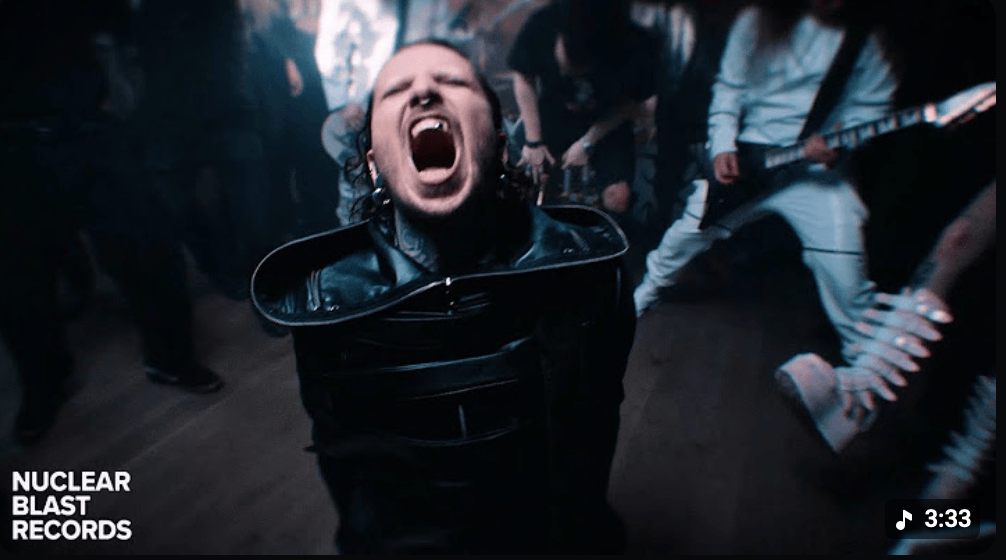
“We were like, ‘Hell yeah! Just tell us where to be,’” she laughs.
The experience left a lasting impression, and afterwards she found herself hoping they might one day create music together.
“It would be so much fun to collaborate with him.”
That opportunity arrived sooner than expected.
While working in the studio with her producer, she heard an instrumental that immediately clicked.
“He played the beat and I thought, ‘Yes. This is exactly what I wanted.’”
As the song gradually came together, one thing became increasingly obvious.
“We thought, ‘This part has to be screamed.’”
Initially, her own bassist recorded a temporary version of the heavier vocal sections, but Nenerchy couldn’t stop thinking about Samy.
“I messaged him and basically said, ‘I’m not even sure you’ll like this song, and I know you’re busy, but if you’re interested, it’d be amazing to have you on it.’”
The reply came quickly—and was refreshingly straightforward.
“He just answered, ‘Yeah, let’s do it.’”
She still laughs when she remembers opening the message.
“I was so excited. Like a little girl.”
When Samy eventually sent back his recordings, the team gathered in the studio to hear the finished version for the first time.
“We must have listened to it ten times in a row,” she says. “We were just thinking, ‘Oh my God… this is so good.’”
The collaboration didn’t stop there. Only a few weeks later, the pair performed the track together live, bringing the project from the recording studio to the stage.
As our conversation draws to a close, I ask what advice she would give to young women hoping to build a career in music. She pauses for a moment before answering.
“I don’t know if it’s unpopular,” she says with a smile. “But I’d tell them to network. Get to know people.”
More importantly, she believes aspiring artists should be selective about whose opinions they choose to value.
“If you want to get somewhere, find someone who’s already there and ask them for advice.”
Throughout her career, she has encountered countless people eager to tell her what kind of music she should make, how she should sound, or which direction she should take.
“There will always be people telling you what to do,” she says. “But don’t listen to everyone.”
Instead, she has developed one simple principle that continues to guide both her career and her personal life.
“The only opinions that really matter are the opinions of the people who are already where you want to be.”
It is advice she has followed since the beginning of her own journey—and one that continues to shape every step she takes forward.




Leave a Reply